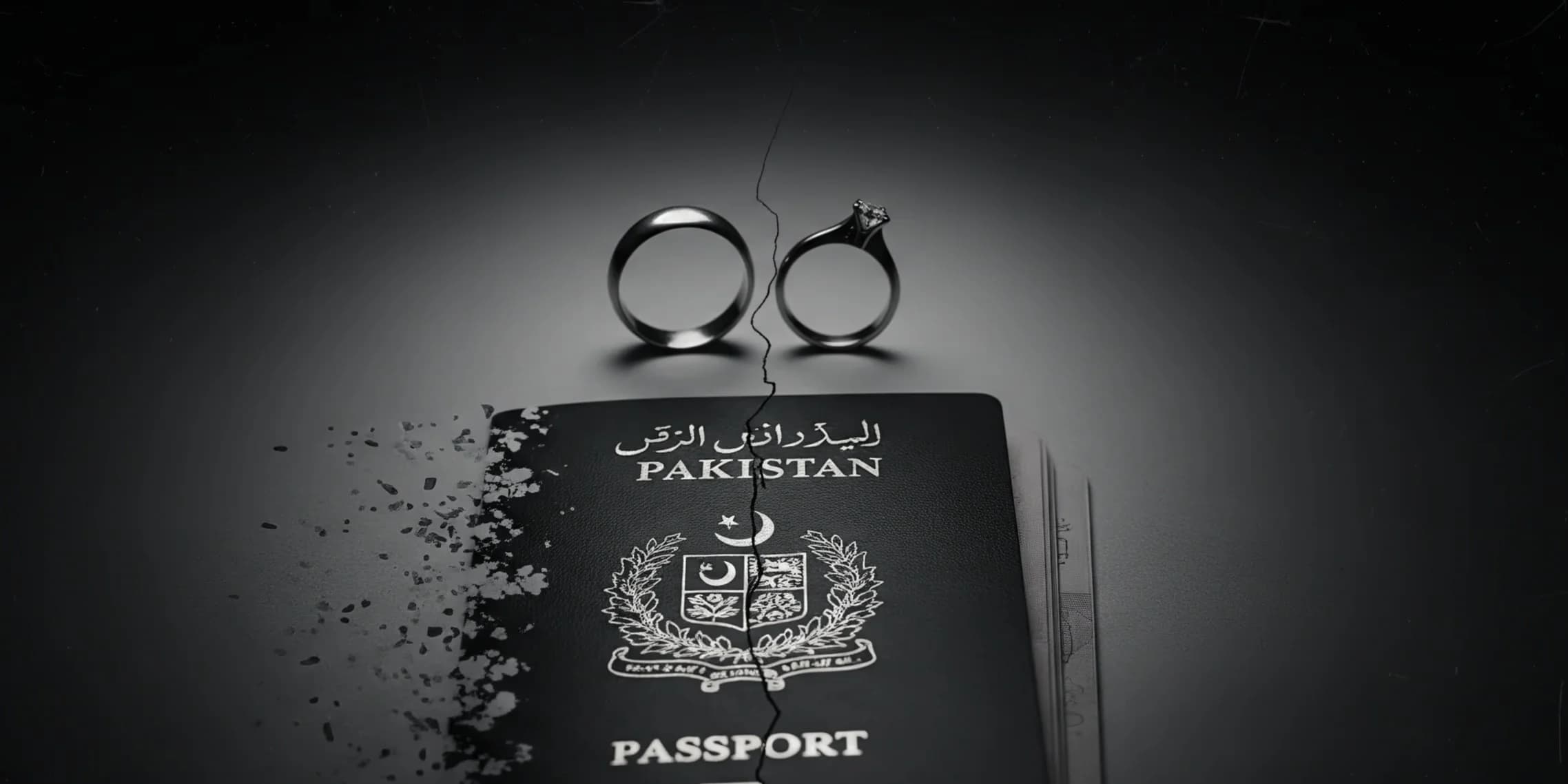
Power of Attorney in Pakistan: Types, Execution, Recent Developments and Revocation
A Power of Attorney (POA) is one of the most widely used and most frequently misused legal instruments in Pakistan. It allows one person (the principal or executant) to legally authorize another person (the attorney or agent) to act on their behalf in property, financial, legal, or other specified matters.
For overseas Pakistanis in particular, a properly drafted and duly attested POA can be the only practical way to manage property, pursue litigation, or handle family and financial affairs in Pakistan without traveling home for every transaction. But a POA is also a document that concentrates real power in another person's hands — and Pakistani courts have, in a series of recent judgments, made clear that this power will be read narrowly and enforced strictly.
1. What Is a Power of Attorney?
A Power of Attorney is a legal instrument through which the principal authorizes an attorney to perform specified acts in the principal's name. The scope of authority can be narrow (a single transaction) or broad (multiple categories of affairs), depending entirely on how the document is worded.
The governing statute — the Powers of Attorney Act, 1882 (Act VII of 1882) — is short (only a handful of substantive sections) but remains the operative law across all provinces and the Islamabad Capital Territory. Section 2 of the Act allows the attorney to sign and execute documents in their own name and, where authorized, under their own seal, and provides that such acts are as legally effective as if the principal had performed them personally. Section 3 protects a person who deals with the attorney in good faith, even if the principal has since died, become of unsound mind, or revoked the POA, provided that fact was not known at the time.
Because the 1882 Act is largely procedural, a POA in Pakistan is also read together with:
The Registration Act, 1908 — governs which POAs must be registered.
The Stamp Act, 1899 (as amended by the provinces) — governs the stamp duty payable on the instrument.
The Contract Act, 1872 — supplies the underlying law of agency (Sections 182–238), including how and when an agency can be revoked.
The Qanun-e-Shahadat Order, 1984 — Articles 79 and 95 set out the evidentiary requirements for proving execution of the document, including attestation by witnesses.
The Transfer of Property Act, 1882, Section 54 — relevant whenever a POA is used to complete a sale or transfer of immovable property.
2. How Is a Power of Attorney Executed Legally?
A valid POA in Pakistan must clearly identify the principal and the attorney (typically by CNIC/NICOP/passport details), and must set out the specific powers being granted in unambiguous language. Courts have repeatedly held that a POA is construed strictly: an attorney may only do what is expressly stated, and any act beyond the four corners of the document can be challenged and set aside.
Standard execution requirements include:
Drafting on the correct value of judicial/stamp paper as prescribed by the relevant provincial Stamp Act.
Attestation by at least two witnesses, consistent with Article 79 of the Qanun-e-Shahadat Order, 1984.
Registration at the Sub-Registrar's office where the POA relates to immovable property or is otherwise required by law — this is mandatory, not optional, for property transactions.
Retention of the original by the principal (or a trusted party) and a certified copy for the attorney's use.
For overseas Pakistanis, the process differs because the document cannot be physically signed before a Pakistani Sub-Registrar. Additional steps are addressed below.
3. Execution by Overseas Pakistanis
An overseas Pakistani has two broad routes to execute a POA for use in Pakistan:
a) Attestation at a Pakistani Mission abroad. The principal typically must appear in person at the Embassy, High Commission, or Consulate of Pakistan with a valid CNIC/NICOP/passport, along with witnesses and their identity documents, and sign the POA before a consular officer. The Mission attests only the signature — it does not certify the contents or legal effect of the document, so the drafting itself should be reviewed by a Pakistani lawyer beforehand.
b) NADRA's Digital/Online Power of Attorney service. Since November 2021, NADRA — in collaboration with the Ministry of Foreign Affairs — has operated a digital POA system that lets overseas Pakistanis apply for and execute a POA remotely, without visiting a Mission in person. The service, initially piloted at select missions, has continued to expand and is now a standard option offered at many Pakistani Missions abroad. Applicants still need a valid CNIC/NICOP/POC and witness identity documents, but the process is faster and does not require an in-person appointment where the local Mission supports it.
If the principal is a foreign national or does not hold a Pakistani travel/identity document, additional prior authentication (through the local State Department/Ministry of Foreign Affairs of the country of residence) is generally required before the Pakistani Mission will attest the document.
4. Types of Power of Attorney
General Power of Attorney (GPA) Special Power of Attorney (SPA) Scope Broad — covers multiple matters or categories of affairs specified in the document Narrow — limited to one specific act or transaction Typical use Managing several properties, running a business, comprehensive representation while abroad Selling one particular property, representing the principal in a single court case, operating one bank account Risk level Higher — gives the attorney extensive, ongoing control Lower — the attorney's authority is clearly bounded Drafting care Requires precise, exhaustive listing of powers to avoid overreach Requires precise description of the single transaction/act authorized
A third category worth noting is the irrevocable POA, or "power coupled with an interest" under Section 202 of the Contract Act, 1872. Where the attorney has a personal financial interest in the subject matter (for example, where the attorney has already paid consideration under an agreement to sell), the principal generally cannot unilaterally revoke the authority to the attorney's prejudice — a point Pakistani courts have upheld in several judgments (see References).
5. Recent Legal Developments
Several changes over the last two to three years directly affect how POAs are executed, used, and challenged in Pakistan:
Apostille Act, 2024. Pakistan acceded to the Hague Apostille Convention in July 2022, with the Convention entering into force on 9 March 2023. After an interim presidential ordinance, Parliament enacted the permanent Apostille Act, 2024, on 14 September 2024, designating the Ministry of Foreign Affairs as the competent authority to issue apostille certificates. For overseas Pakistanis in Hague member states, this can simplify the authentication of underlying documents (educational certificates, corporate records, and similar public documents) that often accompany a POA-based transaction, though attestation of the POA itself at a Pakistani Mission generally remains the standard route.
Expansion of NADRA's Digital POA service. What began as a pilot at a limited number of Missions has continued to expand, giving more overseas Pakistanis the option to execute a POA without an in-person Mission visit.
Stricter judicial construction of attorney's authority. In Haider Aftab & Others v. Dilawar Khan (Civil Revision No. 31616 of 2025), the Lahore High Court held that a General Power of Attorney does not give an attorney unrestricted authority to transfer the principal's property — particularly to the attorney's own relatives — and that an attorney who engages in self-dealing breaches the fiduciary duty owed to the principal, even where the execution of the GPA itself was not proven fraudulent. The Court also reaffirmed that a principal need not prove fraud in the making of the GPA to invalidate a transaction — proof that the attorney exceeded the authority actually granted is sufficient.
Confirmation of the "strict construction" rule. The Lahore High Court's 2025 ruling reported as PLD 2025 Lahore 414 reiterated that a Power of Attorney must be read strictly, and that an attorney may only exercise the powers expressly conferred by the document — a principle directly relevant to disputes over whether a sale, mortgage, or gift fell within the scope of a GPA.
Reaffirmation of attestation and registration requirements by the Supreme Court. In Syed Pervaiz Hussain and another v. Zikr-ur-Rehman and others (Civil Petition No. 520-K of 2024, decided July 2024), the Supreme Court dismissed a petition for leave to appeal and reaffirmed that a General Power of Attorney used in a property transaction must be properly attested by at least two witnesses under Article 79 of the Qanun-e-Shahadat Order, 1984, and that the underlying property transfer must be registered under Section 54 of the Transfer of Property Act, 1882. Failure to meet the attestation requirement renders the document inadmissible as evidence.
The practical takeaway from these developments is consistent: courts are increasingly unwilling to give attorneys the benefit of the doubt where a POA is vaguely worded, improperly attested, or used for a purpose not expressly authorized — which makes careful drafting and proper execution more important than ever, not less.
6. Can a Power of Attorney Be Cancelled or Revoked?
As a general rule, a POA may be revoked by the principal at any time, subject to the wording of the document and the type of agency created. Revocation is most commonly effected by executing a Deed of Revocation, which should then be:
Registered (or presented) at the same Sub-Registrar's office where the original POA was registered, where applicable;
Communicated to the attorney; and
Notified to any third parties, banks, or registrars who may otherwise continue to rely on the original document.
A POA also terminates automatically in certain circumstances under the Contract Act, 1872 (Section 201 and related provisions), including:
Completion of the specific act for which a Special POA was granted;
Death or the principal becoming of unsound mind (subject to Section 3 of the 1882 Act, which protects third parties who deal with the attorney in good faith before learning of the revocation, death, or incapacity); and
Mutual agreement between principal and attorney to end the agency.
An important exception is the irrevocable POA coupled with an interest described above: where the attorney holds a genuine financial stake in the transaction, the principal generally cannot revoke the authority unilaterally to the attorney's detriment. Because the correct revocation procedure depends heavily on the type of POA, whether it has already been acted upon, and whether third-party rights have accrued, anyone considering revocation should obtain specific legal advice before proceeding.
7. Common Risks and Practical Safeguards
Power of Attorney documents — especially in property transactions — remain a frequent vehicle for disputes and, occasionally, fraud. Recurring problems include an attorney selling or mortgaging property without the principal's knowledge, use of an expired or already-revoked POA, forged signatures or fabricated registration, and vague drafting that leaves room for the attorney to claim authority the principal never intended to grant.
Practical safeguards worth building into any POA include:
Naming the specific property, account, or matter rather than using open-ended language;
Setting an expiry date or a condition that automatically terminates the authority once the specified act is complete;
Registering the POA (and any revocation) wherever registration is legally required or simply prudent;
Keeping the attorney's obligations and any restrictions (e.g., "may not sell to a relative," "may not mortgage the property") explicit in the text; and
Notifying relevant banks, registrars, and counterparties promptly upon revocation.
Conclusion
A Power of Attorney remains an indispensable tool for overseas Pakistanis who need property bought, sold, litigated over, or otherwise managed in Pakistan without being physically present. Digitisation of the process — through NADRA's online POA service and Pakistan's accession to the Apostille Convention — has made execution more convenient than it was even a few years ago. At the same time, recent judgments from the Lahore High Court and the Supreme Court show that courts are scrutinising POAs more closely than ever, particularly in property matters, and will not read broad authority into loosely drafted documents.
The safest course remains the same one it has always been: have the POA drafted, executed, attested, and — where required — registered with the assistance of a qualified lawyer who understands both the statutory requirements and how courts are currently interpreting them.
This article is provided for general informational purposes and does not constitute legal advice. For a Power of Attorney tailored to your specific circumstances, consult a qualified lawyer.
References
Statutes
Powers of Attorney Act, 1882 (Act VII of 1882)
Registration Act, 1908
Stamp Act, 1899 (as amended by the relevant province)
Contract Act, 1872, ss. 182–202
Qanun-e-Shahadat Order, 1984, Arts. 79, 95
Transfer of Property Act, 1882, s. 54
Apostille Act, 2024
Case Law 8. Haider Aftab & Others v. Dilawar Khan, Civil Revision No. 31616 of 2025 (Lahore High Court) 9. PLD 2025 Lahore 414 10. Syed Pervaiz Hussain and another v. Zikr-ur-Rehman and others, Civil Petition No. 520-K of 2024 (Supreme Court of Pakistan, 2024) 11. 2015 PLD 212 (Supreme Court) 12. 2015 YLR 2298 (Karachi High Court, Sindh) 13. 2012 MLD 931 (Lahore High Court) 14. 2003 SCMR 1555 (Supreme Court)
Official Sources 15. Ministry of Foreign Affairs, Government of Pakistan — Apostille Convention accession notice 16. NADRA — Digital/Online Power of Attorney service (poa.nadra.gov.pk) 17. Hague Conference on Private International Law (HCCH) — Pakistan's accession to the Apostille Convention