Can I divorce in Pakistan while living abroad?
Yes. You can appoint an advocate through a Power of Attorney. Your attorney can file or defend family proceedings in Pakistan on your behalf.
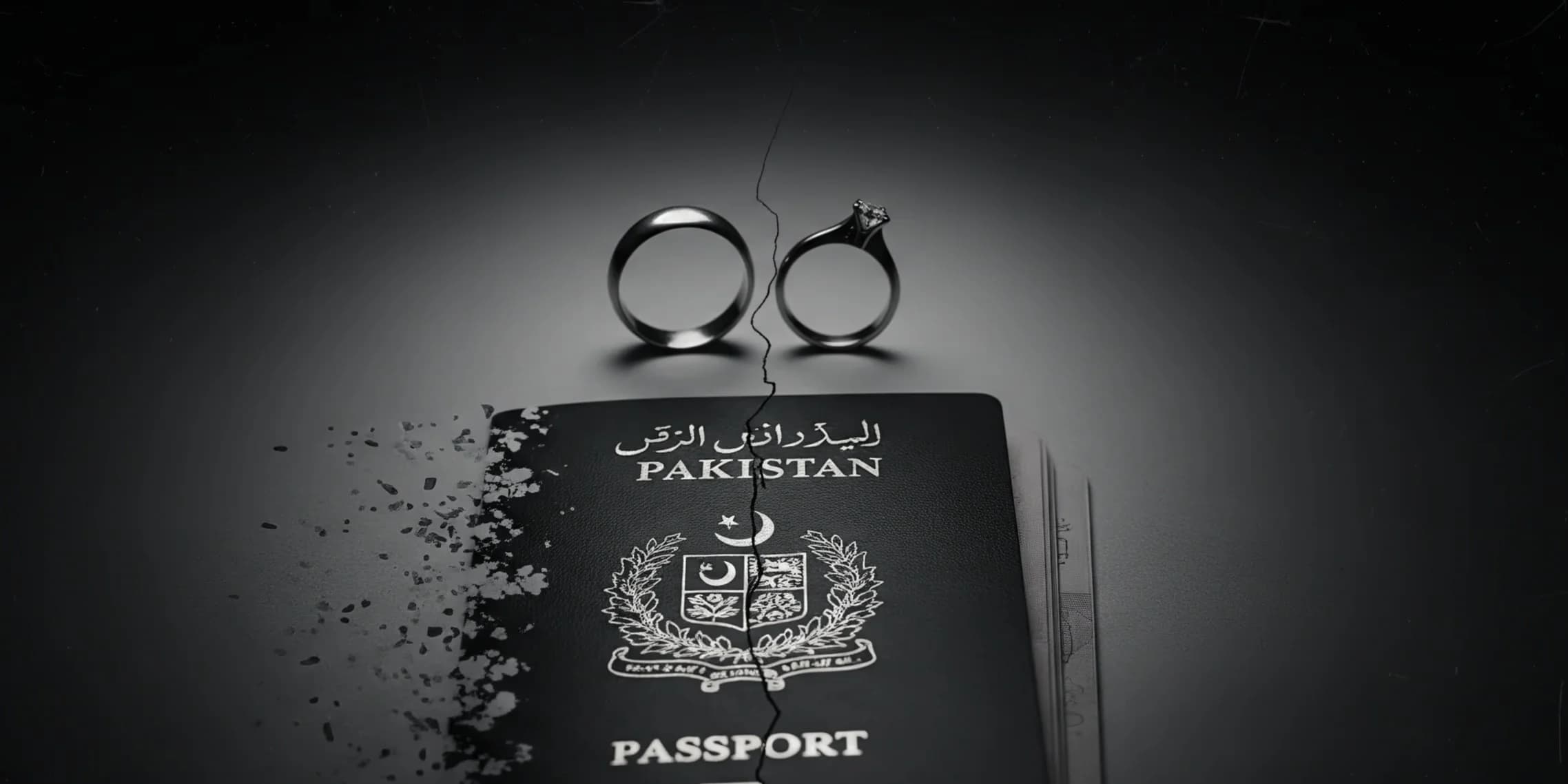
Living abroad should not make it unnecessarily difficult to resolve a family law matter in Pakistan. We assist overseas Pakistanis with divorce and Khula proceedings, legal representation, documentation and coordination with relevant authorities.
Speak with our legal team about your situation and understand your available options before taking the next step.
Yes. You can appoint an advocate through a Power of Attorney. Your attorney can file or defend family proceedings in Pakistan on your behalf.
In most cases, no. Court appearances are handled through your attorney, and Pakistani missions abroad can attest your documents.
The Muslim Family Laws Ordinance, 1961 and the Family Courts Act, 1964 apply to Pakistani citizens, including those living overseas.
Whether you are living in the United Kingdom, United States, Canada, Europe, the Gulf or elsewhere, family law proceedings in Pakistan can involve documents, court procedures and communication with local authorities. Proper legal planning can make the process easier to manage from abroad.
The procedure differs depending on whether the matter involves Talaq/divorce initiated by the husband or Khula initiated by the wife.
Route One
An overseas Pakistani husband may need to authorize a representative in Pakistan and follow the applicable notice, reconciliation and documentation procedure through the relevant Union Council or Arbitration Council.
Route Two
An overseas Pakistani woman may initiate Khula proceedings in Pakistan through the appropriate Family Court and, where applicable, authorize a lawyer or representative to manage proceedings on her behalf.
The exact documents depend on the circumstances of the case. A legal assessment should be made before sending original documents or executing a Power of Attorney.
CNIC / NICOP details
Marriage / Nikahnama documents
Passport and overseas identification
Special Power of Attorney where required
Spouse's available identification details
Relevant address information
Existing legal or court documents
Other case-specific supporting documents
The exact procedure depends on the circumstances and applicable jurisdiction. The following provides a general overview of the process described for overseas Pakistani clients.
Overseas Pakistani women may be able to pursue Khula proceedings in Pakistan through legal representation under the Dissolution of Muslim Marriages Act, 1939 and the Family Courts Act, 1964 with the constitutional guarantee of due process under Articles 4 and 10-A of the Constitution of the Islamic Republic of Pakistan.
Important
Documents executed outside Pakistan may have specific authentication or attestation requirements. Before executing or sending original documents, note that:

Overseas family law matters can become difficult when legal documents, court proceedings and local authorities have to be coordinated from another country. Our role is to provide a clear legal point of contact in Pakistan and help clients understand the steps applicable to their matter.
The Constitution of the Islamic Republic of Pakistan (1973) secures fundamental rights for every Pakistani citizen, explicitly extending these protections regardless of where the citizen currently resides.
Explicitly guarantees the right of individuals to be dealt with in accordance with law, declaring this right is inalienable for every citizen 'wherever he may be'.
Ensures due process and fair trial rights in family court actions, even when represented via authorized attorneys or participating remotely.
Guarantees the right to enter, remain in, and move freely throughout Pakistan, protecting overseas citizens' travel and immigration status.
Ensures the right to acquire, hold, and deal with properties inside Pakistan, safeguarding overseas assets from illegal dispossession.
Guarantees equal protection under the law, preventing discriminatory treatment based on overseas residence status.
Provides constitutional remedies (writ petitions) for overseas citizens facing illegal property grabbing, custody problems, or administrative overreach in Pakistan.
The primary statutes and rules governing overseas documentation, representation, and personal law:
Allows overseas citizens to legally appoint representatives in Pakistan to conduct litigation, manage property, or handle divorce.
Includes S.R.O. 1086(K)/61, allowing Pakistan Diplomatic Missions to perform Arbitration Council functions for overseas couples.
Governs succession certificates and inheritance management for overseas heirs of Pakistani estates.
Regulates the registration of powers of attorney and deeds executed abroad and presented in Pakistan.
Under S.R.O. 1086(K)/61 (Muslim Family Laws Ordinance), where both spouses reside outside Pakistan, the Pakistan diplomatic mission in that country is authorized to act as the Arbitration Council, simplifying reconciliation and divorce certification without requiring travel.
Find answers to common questions about our legal services, consultation process, and handling of legal matters in Pakistan.
Yes. An overseas Pakistani may initiate divorce proceedings in Pakistan through the applicable legal process and, where appropriate, through an authorized legal representative using a properly executed Special Power of Attorney.
Yes. An overseas Pakistani woman may initiate Khula proceedings in Pakistan through an authorized representative. A Special Power of Attorney may be required and documents executed abroad may need the appropriate attestation.
A Special Power of Attorney authorizes a person or lawyer in Pakistan to take specified legal steps on behalf of the person living abroad. The document must be prepared and authenticated according to the applicable requirements.
Physical presence requirements depend on the nature of the proceedings, court directions and the documents involved. In many matters, representation can reduce the need for repeated travel, subject to the applicable legal requirements.
The appropriate Union Council, Arbitration Council or Family Court depends on the circumstances of the marriage, residence of the parties and applicable jurisdictional rules. A lawyer can assess the appropriate forum before proceedings are initiated.
The process generally involves preparing the required authority documents, submitting the divorce notice to the relevant Union Council or Arbitration Council and completing the statutory reconciliation and documentation process.
The process generally involves preparing the required authority documents, filing a Khula petition before the appropriate Family Court, court proceedings and reconciliation attempts, followed by the relevant post-decree documentation process.
Documents executed outside Pakistan may require authentication or attestation by the relevant Pakistani Embassy, Consulate or other competent authority before they can be used in Pakistan. The exact requirement depends on the document and the jurisdiction where it was executed.
The timeframe varies according to the type of case, court schedule, service of notices, reconciliation proceedings and documentation requirements. No fixed completion period can be guaranteed for every case.
Pakistani divorce documentation may be required for official purposes abroad. Depending on the destination country and institution, additional attestation, authentication or translation may be required.
Overseas Pakistanis can pursue and respond to divorce and khula in Pakistan through counsel, powers of attorney, and video-link participation. Get a confidential consultation from where you are.
Tell us the essentials on WhatsApp or through the form. No lengthy paperwork to start.
Get a confidential consultation covering process, documents and expected timeline.
Receive a clear plan and transparent fee understanding before any work begins.
Matters are handled professionally and discreetly. Client confidentiality, always.
Get Started Today
Timeline
Realistic timeframes explained in your first consultation. No vague promises.
Fees
Clear fee structure before engagement. What you pay and what it covers.
Free guides on how divorce and khula actually work for Pakistanis living abroad.

How overseas Pakistanis can divorce under Pakistani law without living in Pakistan: powers of attorney, video-link participation, talaq notices from abroad, khula for wives overseas, and documenting the divorce for foreign authorities.

The legal difference between khula and talaq in Pakistan: who initiates each, consent requirements, dower consequences, court procedure, and how each type of divorce is documented.
Legal matters rarely exist in isolation. These related services cover the rights, documentation and procedures that often overlap with the topic on this page:
Talaq, Khula and mutual divorce procedures conducted inside Pakistan.
Explore ServiceNADRA and Union Council marriage records commonly required for overseas cases.
Explore ServiceMaintenance claims that may begin or continue after separation, pursued in Pakistani courts.
Explore ServiceManaging, transferring or protecting property in Pakistan through authorized representatives.
Explore ServiceHear directly from people who have trusted Hassan Legal Practice with important legal matters.
Hassan is a highly trustworthy, professional, and dedicated lawyer. His expertise, integrity, and commitment to his clients are truly commendable. I would confidently recommend his legal services to anyone seeking reliable and effective legal representation.
Miss Syed
Verified Client Review
Have you worked with us?
Share your experience with Hassan Legal Practice.