Who must pay child maintenance?
The father is legally responsible for maintaining his children. The duty covers food, clothing, education, and medical care.

Professional legal assistance for child maintenance matters, Family Court proceedings, and financial support disputes involving children in Pakistan.
Speak with our legal team about your situation and understand your available options before taking the next step.
The father is legally responsible for maintaining his children. The duty covers food, clothing, education, and medical care.
The Family Court reviews the father's income, the child's needs, and the family's standard of living. Orders can be revised as circumstances change.
Generally until a son turns 18 and for a daughter until marriage, unless special needs apply. The court decides on the facts of each case.
Legal guidance regarding financial support for children.
Assistance with family law procedures and maintenance claims.
Practical advice based on the circumstances of your matter.
Child maintenance is a critical aspect of family law in Pakistan. Advocate Syed Hassan Shah provides legal guidance to parents and families regarding maintenance claims, Family Court procedures, and financial support obligations.
Child maintenance is financial support provided for the care and upbringing of a child. It may become a significant issue following separation or divorce.
The amount of maintenance is not automatically the same in every case. Courts consider the circumstances of the child and the financial capacity of the parent responsible for maintenance.
Child maintenance, sometimes referred to as child support, generally concerns financial contributions toward the basic needs of a child.
Under Pakistani family law principles, the father generally has the primary responsibility for financially maintaining his children, subject to the facts of the case and applicable law.
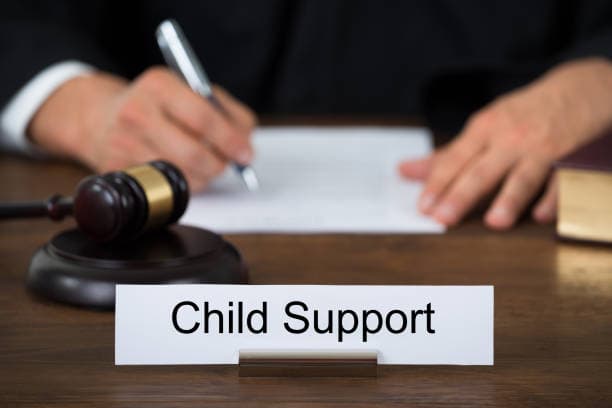
Child maintenance matters may involve Islamic principles, Pakistani family law legislation including the Family Courts Act, 1964 and the Guardian and Wards Act, 1890, depending on the circumstances. The protection of the family, mothers, and children is also a constitutional principle under Article 35 of the Constitution of the Islamic Republic of Pakistan.
The applicable legal principles and the circumstances of the family determine the obligations and relief that may be available.
There is no single fixed amount that applies to every child maintenance case in Pakistan. The Family Court considers the circumstances of the case, including the child's needs and the financial capacity of the parent responsible for maintenance.
Relevant financial records may include salary information, business documents, tax records, or other evidence of financial capacity.
The age, education, health, and individual circumstances of the child may affect the maintenance assessment.
School fees, tuition, books, uniforms, transport, and other education-related expenses may be relevant.
Regular or significant medical expenses may be considered where applicable.
The circumstances and standard of living of the family may form part of the overall assessment.
The number of children and their individual requirements may affect the overall maintenance obligation.
There is no universally applicable official minimum or fixed average child maintenance amount. Courts determine maintenance according to the circumstances of each case, including the needs of the child and the financial capacity of the responsible parent.
The Constitution of the Islamic Republic of Pakistan (1973) establishes a strong framework for protecting the family, mothers, and children. In custody and maintenance proceedings, courts interpret statutory rules in light of these constitutional commitments.
Ensures that all actions affecting the custody, guardianship, or maintenance of a minor are conducted strictly in accordance with statutory procedures.
Underpins protection against arbitrary deprivation of life, safety, or physical custody of minors.
Guarantees both parents a fair hearing and procedural due process during guardianship and maintenance trials.
Protects the domestic peace and privacy of the family, particularly relevant in visitation and custody disputes.
Secures equal rights for all citizens, ensuring custody and maintenance considerations are evaluated fairly without arbitrary gender bias.
Allows the state to make special legal provisions for the protection, welfare, and maintenance of women and children.
Enables constitutional writ petitions (such as habeas corpus) to recover children from illegal custody or resolve serious procedural custody violations.
The primary statutes regulating child maintenance, custody, and guardianship in Pakistan:
Governs appointment of guardians, custody, and visitation. Section 17 sets child welfare as paramount.
Establishes Family Courts with exclusive jurisdiction over child custody and maintenance claims.
Regulates maintenance claims, dower recovery, and arbitration procedures.
Outlines procedural rules for filing maintenance and custody actions.
Under Section 17 of the Guardians and Wards Act, 1890, the courts are bound to prioritize the welfare and best interests of the child as the paramount consideration when appointing a guardian or awarding custody, overriding other considerations.
A maintenance claim is only as strong as the arithmetic behind it. Our child maintenance calculator for Pakistan estimates the child's real monthly costs across education, food, housing, healthcare, clothing and transport, and lists the documents that support each figure.
The estimate is a planning tool, not a prediction of the court order: the Family Court weighs the child's needs against the parent's financial capacity on the evidence of the case. Used honestly, it turns a vague demand into a documented claim. For the law behind the claim, read our child maintenance guide for Pakistan, covering responsibility, interim maintenance, procedure and enforcement.
Find answers to common questions about our legal services, consultation process, and handling of legal matters in Pakistan.
Child maintenance is the financial support provided by a parent to cover the basic needs of their child, including food, clothing, education, and medical care.
Child maintenance in Pakistan is determined according to the circumstances of the case, including the child's needs and the financial capacity of the parent responsible for maintenance.
Under Pakistani family law principles, the father generally has the primary responsibility for financially maintaining his children, subject to the circumstances of the case.
Yes. Maintenance may be reviewed when circumstances change, including changes in the child's needs or the financial circumstances of the person responsible for maintenance.
If a maintenance order is not complied with, the entitled party may pursue enforcement through the appropriate legal process.
The duration of child maintenance depends on the applicable law and the circumstances of the child and case. A family lawyer can advise on the specific situation.
Custody and maintenance orders shape your child's childhood. Get a confidential consultation on your case. The process, documents, and realistic timeline before the next hearing.
Tell us the essentials on WhatsApp or through the form. No lengthy paperwork to start.
Get a confidential consultation covering process, documents and expected timeline.
Receive a clear plan and transparent fee understanding before any work begins.
Matters are handled professionally and discreetly. Client confidentiality, always.
Get Started Today
Timeline
Realistic timeframes explained in your first consultation. No vague promises.
Fees
Clear fee structure before engagement. What you pay and what it covers.
Understand Your Matter First
Browse all guides →These free guides answer the questions parents most often search before filing a custody or maintenance case.
How child maintenance works in Pakistan: who owes it, the expenses it covers, how Family Courts assess the amount, interim maintenance, the documents and evidence that matter, and what happens when maintenance is not paid.
How child custody works in Pakistan: the difference between custody and guardianship, mothers' and fathers' rights, the welfare principle under the Guardians and Wards Act 1890, and how Family Court cases actually proceed.

What nafaqa (wife maintenance) includes in Pakistan, when a wife is entitled to it, how Family Courts calculate the amount, how to file a maintenance case, and how arrears are enforced.
Legal matters rarely exist in isolation. These related services cover the rights, documentation and procedures that often overlap with the topic on this page:
Mother-and-child maintenance claims are often filed together before the Family Court.
Explore ServiceDivorce and Khula proceedings where child maintenance forms part of the outcome.
Explore ServiceMarriage and Nikahnama records used to establish relationships in family proceedings.
Explore ServicePursuing or responding to family matters while a parent lives abroad.
Explore Service